
Simulation
Photorealistic environments where lighting, cameras, materials, and objects are controlled in software.
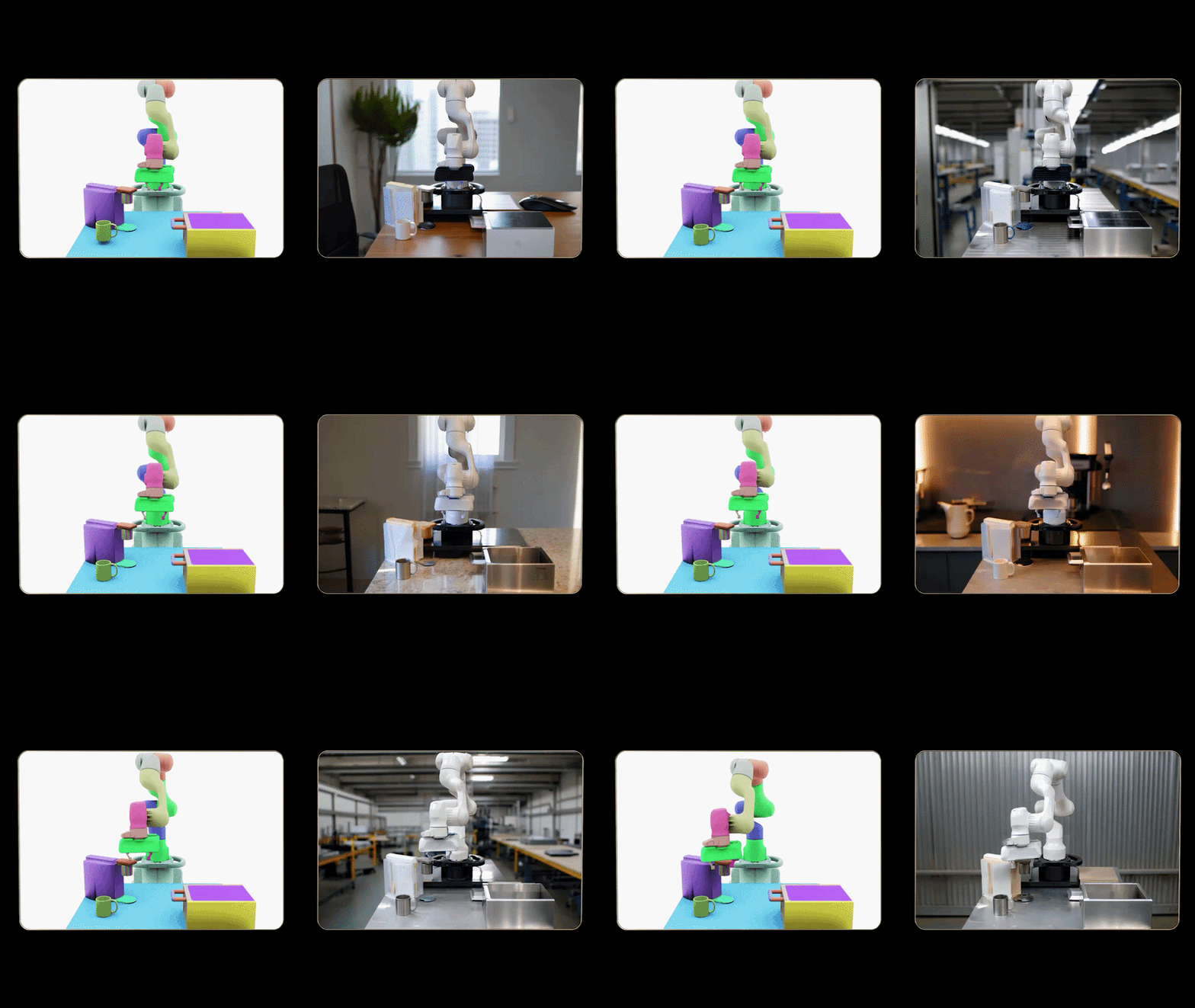
Photorealistic simulation for vision data.
A virtual mirror of the real setup. Parts, fixtures, lights, cameras, and materials live as parameters. Each render produces a labeled image with exact ground truth, ready for training and validation.
Why the real world is a slow lab.
Real capture is rigid
Each new lighting condition or camera angle means new fixtures, new sessions, and new schedule slots.
Conditions drift over time
A new batch, a new lens, or a moved lamp shifts the input. Models trained on yesterday's data degrade.
Edge cases stay hidden
The conditions that break perception in production are exactly the ones rarely seen on the line.
How we build the simulation.
Build the scene in software
Parts, fixtures, and environments are modeled once. Materials and geometry are reused across projects.
Vary lighting and cameras
Lights, exposure, lens, and viewpoint are parameters. Render dozens of variations of the same scene in parallel.
Regenerate when conditions change
New camera, new product, new line layout. Adjust the parameters and rebuild the dataset on the same pipeline.

Talk to us about your dataset.
Tell us the inspection task and the conditions. We will come back with what is feasible, the timeline, and the cost.