Industrial inspection
Synthetic datasets for automated quality control on production lines. Train and validate vision models on the conditions your station will actually see.
Industrial inspection in one paragraph.
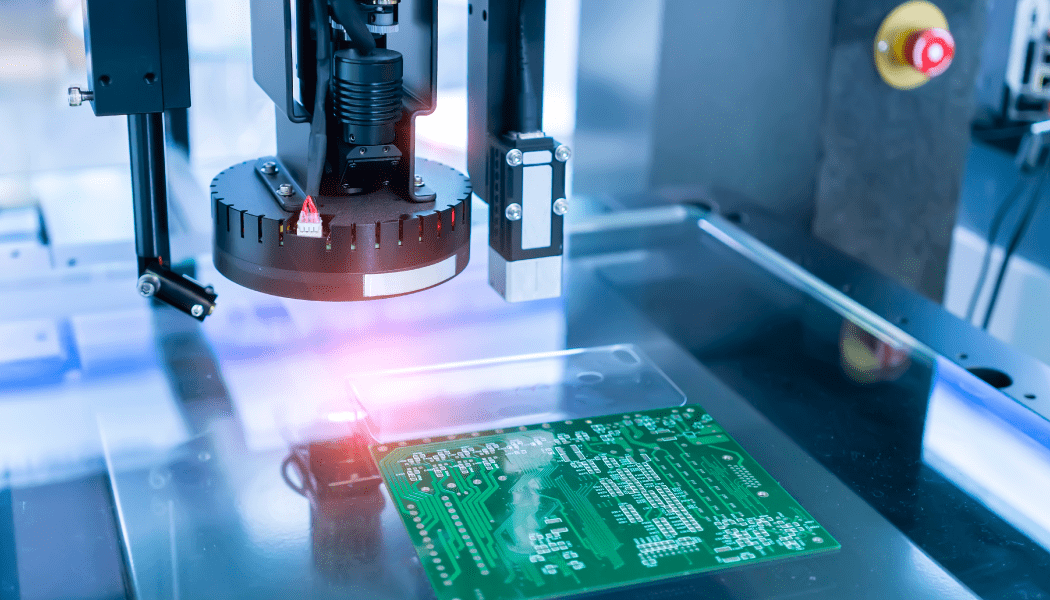
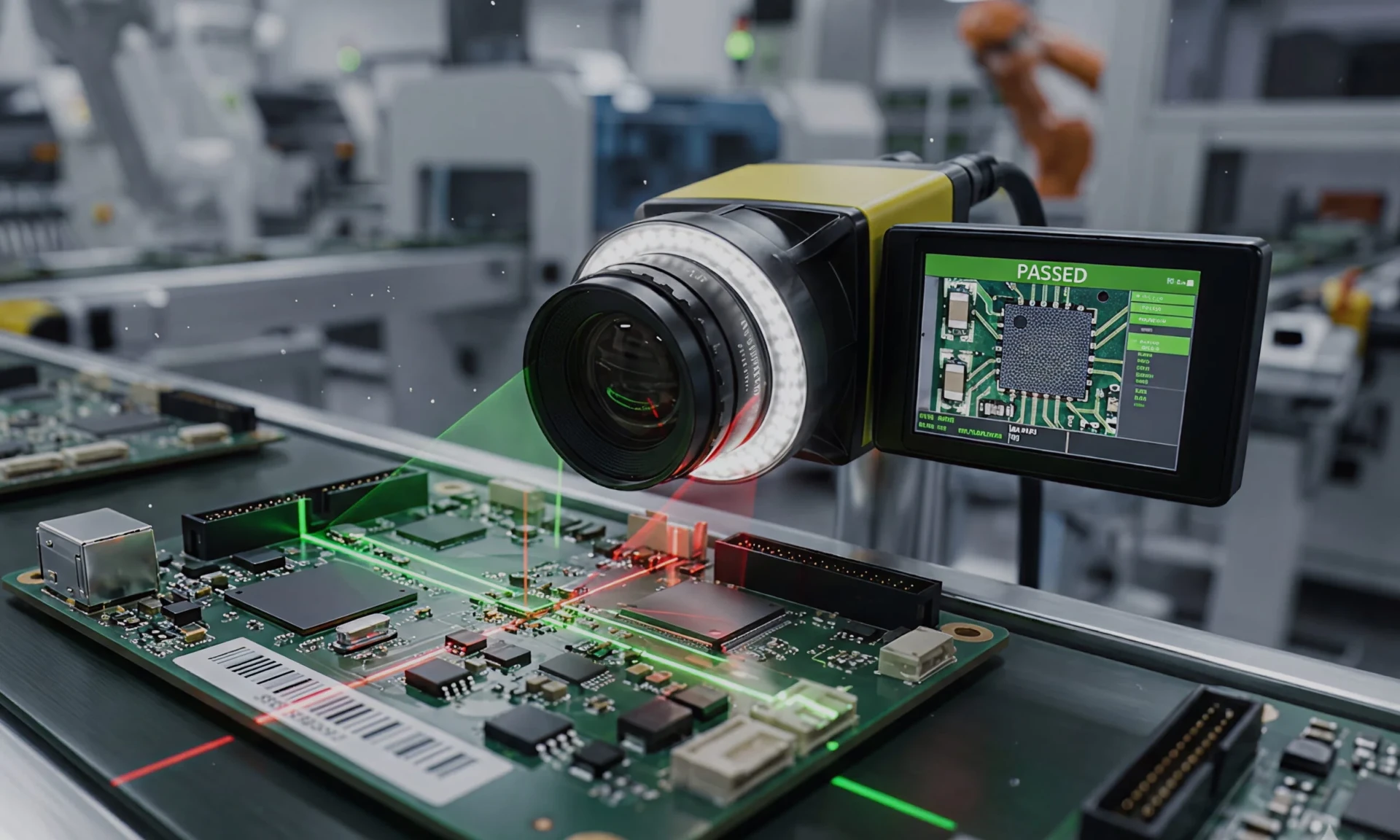
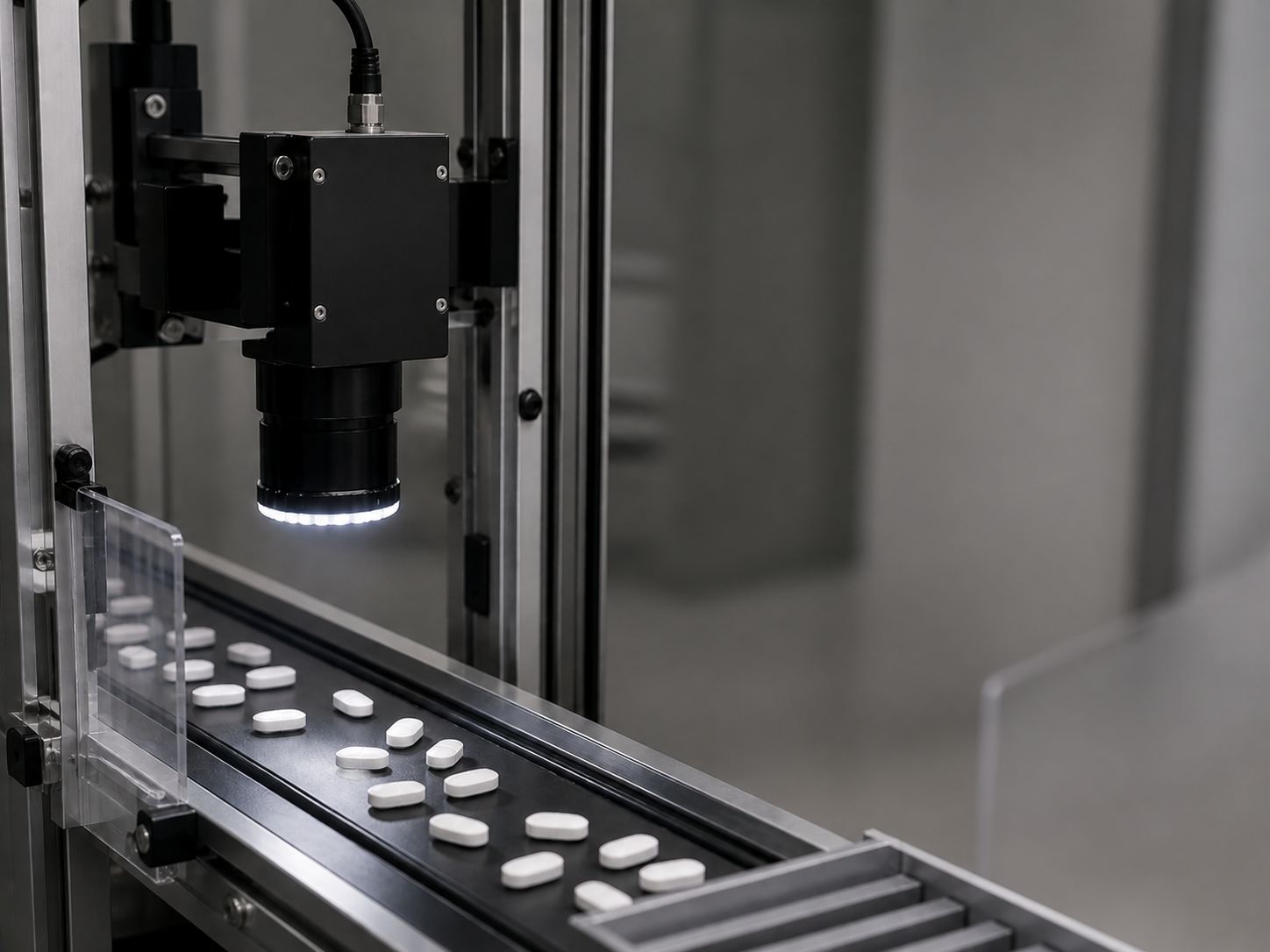
Industrial inspection checks parts against a defined standard. Dimensions, surface quality, assembly, contamination. On modern lines this work runs on cameras and vision models next to the line.
Catch the defects that matter. Pass the parts that are good. Do it at line speed.
Inspection is where quality is decided.
Quality at line speed
The station has to keep up with the line. A station that slows production gets bypassed.
Compliance
Regulated industries like pharma require a record for every unit. Vision systems give that record.
Cost of escape
A defect found at the station costs cents. Found by a customer it costs orders of magnitude more.
Safety
Missed contamination or assembly faults cause harm downstream.
Why building a reliable model is hard.
The hard part of inspection is not the model. It is the data.
Real defect data is rare
The defects you most need to catch are the ones the line produces least often.
Labeling is slow
Pixel accurate labels are done by hand. Backlogs grow faster than teams clear them.
Conditions drift
Lighting, materials, and camera position shift between batches. Narrow datasets break.
Live testing is hard
Line time is limited. Every trial competes with output and takes weeks to coordinate.
Synthetic data and photorealistic simulation.
Synthetic data is image data generated by software instead of captured by a camera. A virtual station mirrors the real one. Lights, cameras, materials, and defects are parameters. Labels come for free with each render.
Generative models work the other way. They take a few real samples and produce controlled variations. Simulation covers physics. Generative covers texture. The two methods are complementary.
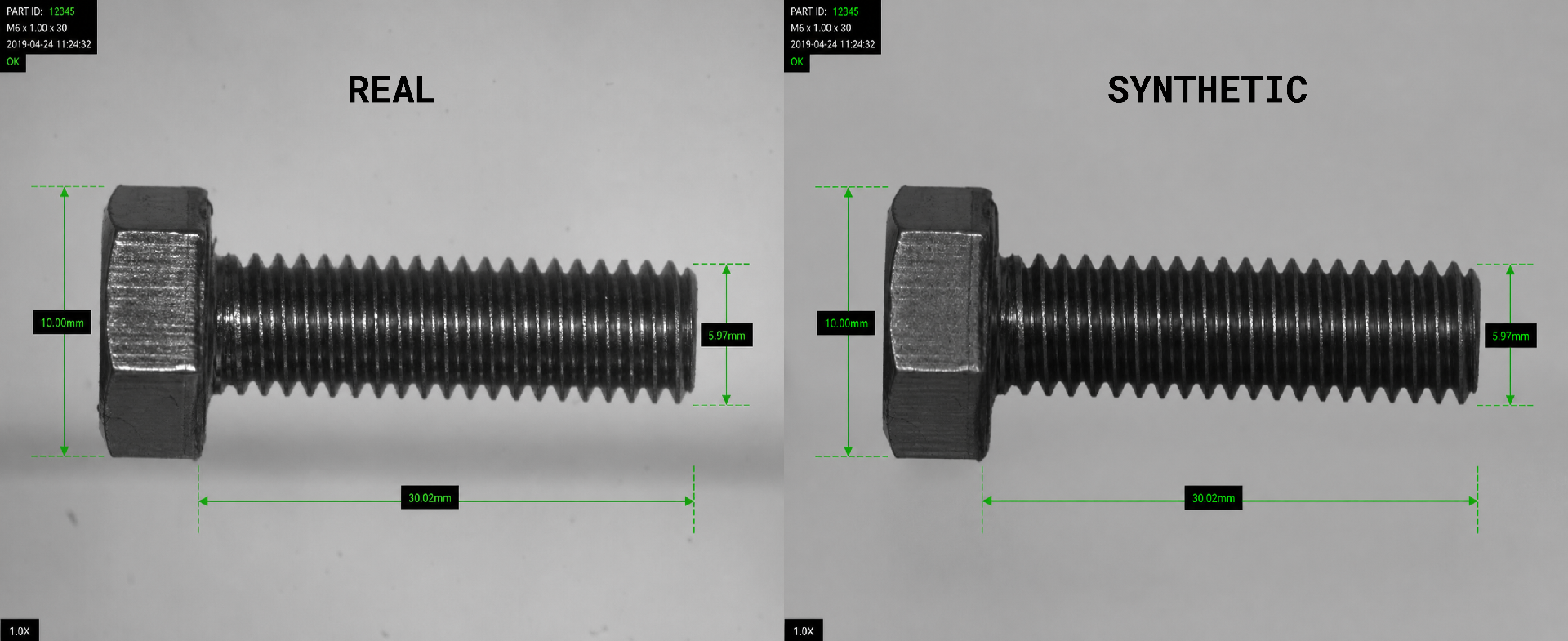
Three ways synthetic data changes the work.
Cover rare defects
Set the conditions and render thousands of examples of the failure mode you need to catch.
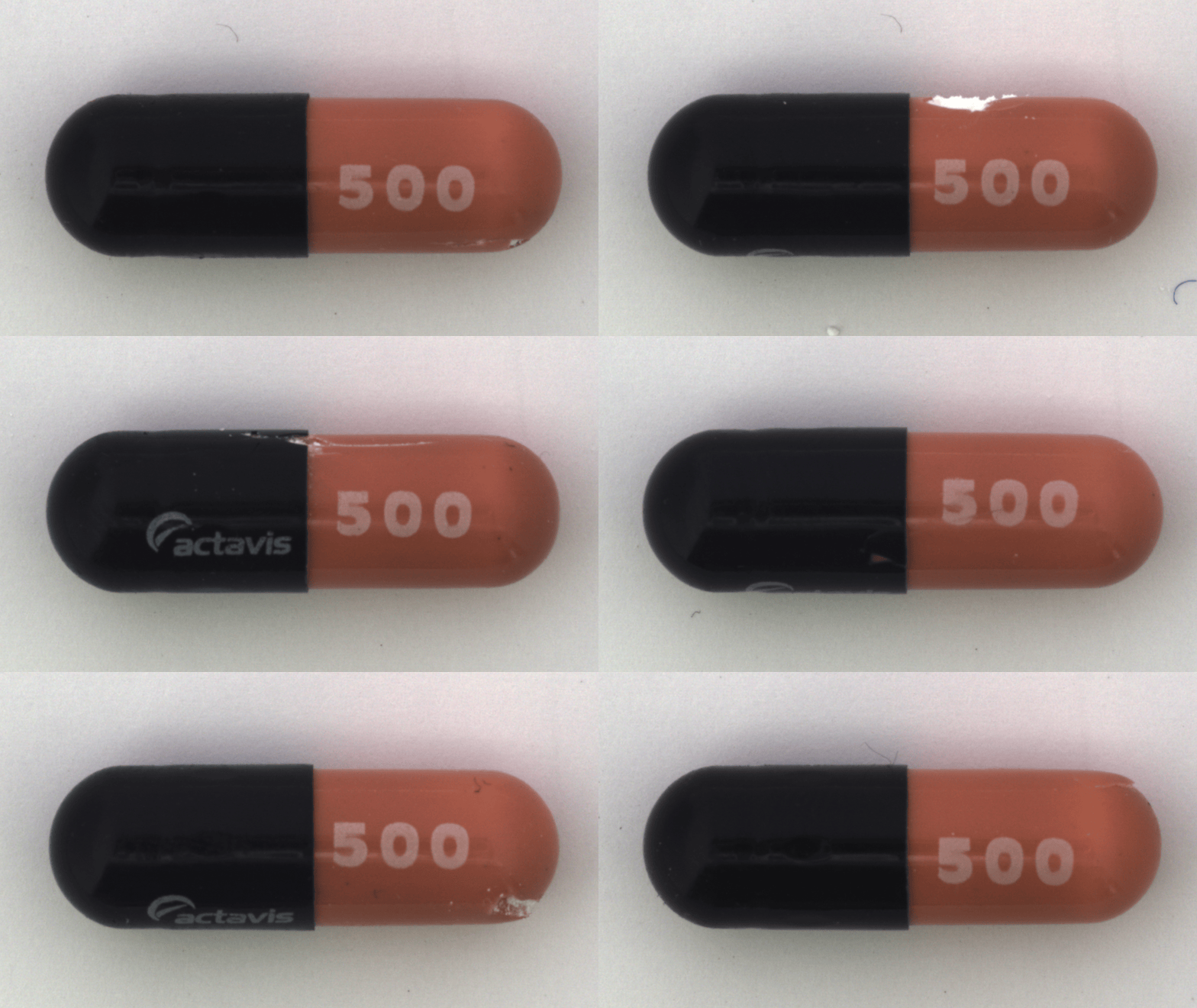
Validate before touching the line
Change camera angle, exposure, or lighting in software. Retrain and measure without booking line time.
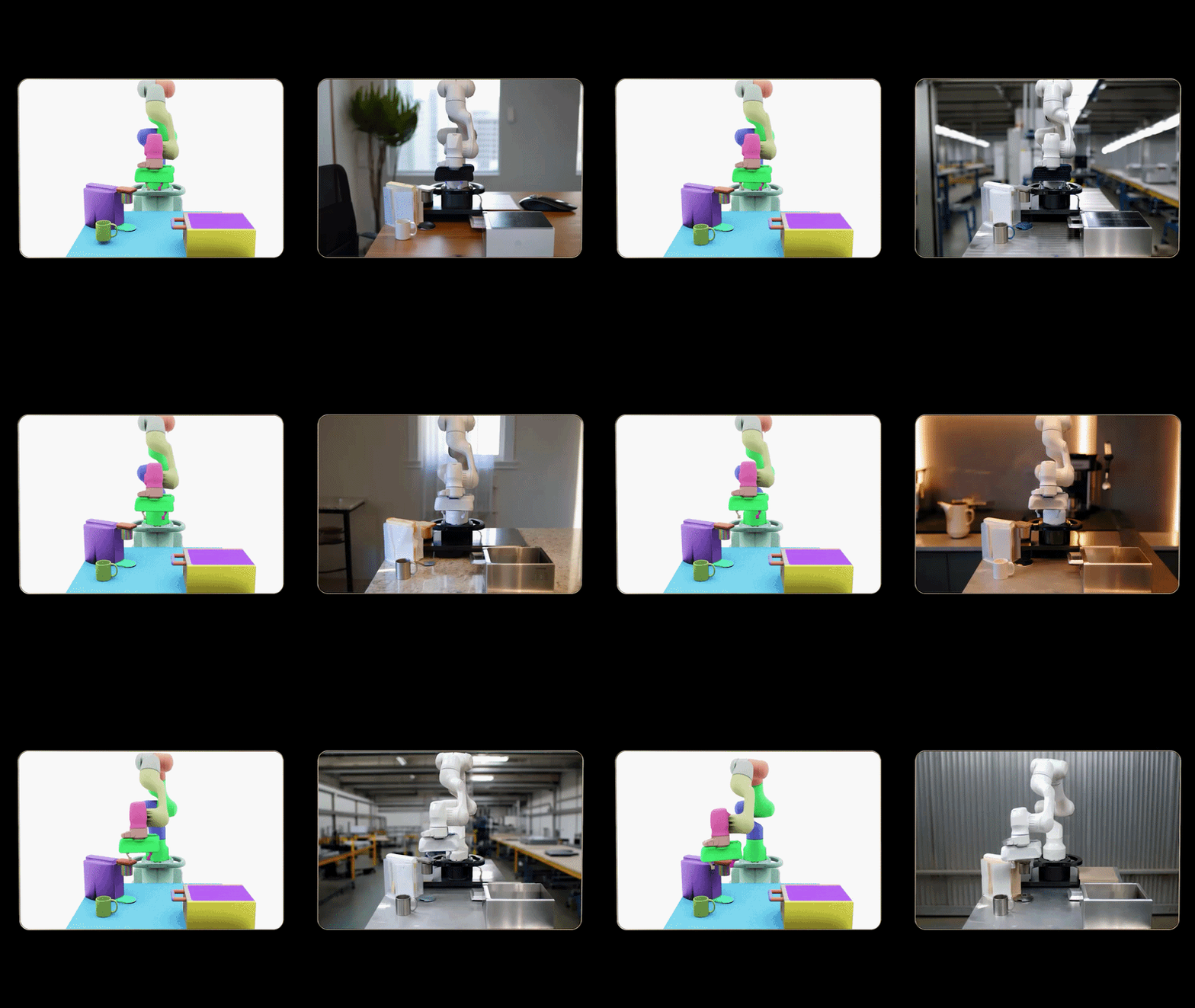
Stay robust as conditions change
New batch or new camera position. Regenerate the dataset under the new conditions and retrain. Same pipeline.
What teams get out of it.
Faster time to a working model
Weeks instead of months on the data step.
Coverage real data cannot reach
Rare defects, edge lighting, awkward angles.
Lower cost per iteration
New variants are a render away, not a new collection campaign.
Talk to us about your dataset.
Tell us the inspection task and the conditions. We will come back with what is feasible, the timeline, and the cost.